
Netherlands Secondary School Transition Guide: Everything About the 2026 Doorstroomtoets and SchooladviesThe Netherlands Secondary School Transition process is a multi-layered period that is not just about an exam, but affects the child's entire academic future and psychological well-being. When February arrives, the levels of excitement and stress in Dutch homes increase; because this month is …
Netherlands Secondary School Transition Guide: Everything About the 2026 Doorstroomtoets and Schooladvies
The Netherlands Secondary School Transition process is a multi-layered period that is not just about an exam, but affects the child’s entire academic future and psychological well-being. When February arrives, the levels of excitement and stress in Dutch homes increase; because this month is both the application period for the Doorstroomtoets (Transition Test) and the time when definitive school recommendations (Schooladvies) become clear. As an Orthopedagoog, the most important thing I have seen while guiding hundreds of families managing this process in our center in Rotterdam is that correct information reduces anxiety.
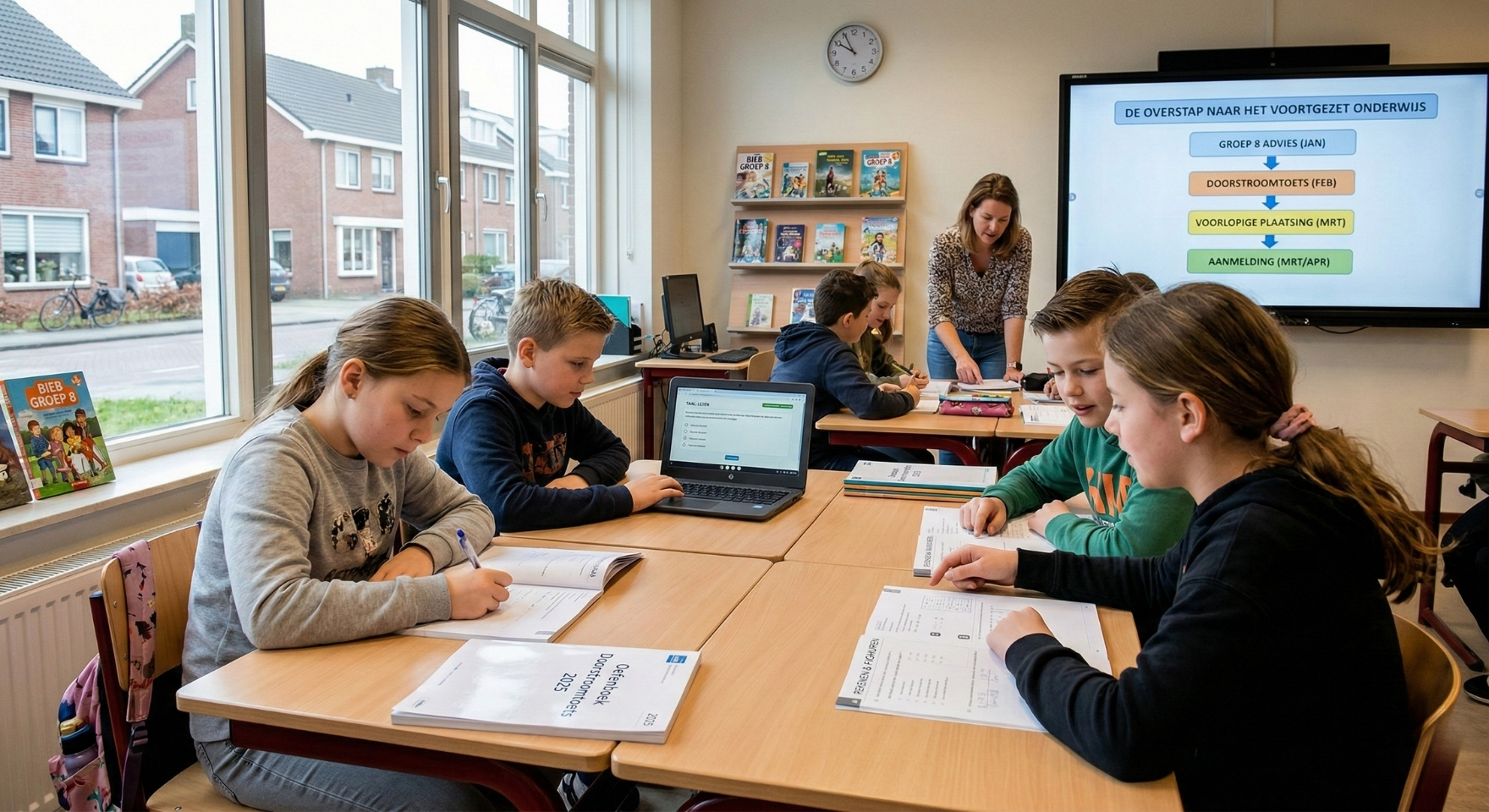
We will address all the details of the Netherlands Secondary School Transition system, your legal rights, and what you need to do for your child to get through this period with the least amount of stress from a professional perspective. If your child is in the 8th grade (Groep 8), this guide will be your roadmap.
What is the Doorstroomtoets and Why is it Important in the 2026 Process?
The Dutch education system has undergone a fundamental change in recent years. The exam formerly called “Eindtoets” (Final Test) and held in April-May has now been renamed “Doorstroomtoets” as the Netherlands Secondary School Transition calendar has been moved earlier. The main purpose of this change is to place the effect of the exam result on the school recommendation (Schooladvies) on a fairer and more timely ground.
2026 Exam Calendar and Application Details
The exam period determined for 2026 is between January 26 and February 15. During this period, students take one of the centralized tests selected by the school (Cito, Route 8, IEP, etc.). The content of the exam essentially measures two basic competencies:
- Language Competency (Taal): Reading comprehension (begrijpend lezen), spelling rules, grammar, and vocabulary.
- Mathematics Competency (Rekenen): Numbers, ratios, units of measurement, and logical problem-solving.
The role of this exam is critical in the Netherlands Secondary School Transition process; because if the exam result is higher than the recommendation given by the school, the school is obliged to revise this recommendation upwards. This rule ensures that children’s potential at the time of the exam is not ignored. You can examine the Dutch Education Inspectorate page for the official details of the exam system.
Schooladvies (School Recommendation) and Secondary School Levels
In the Netherlands, the education system separates students into different levels at the age of 12. The most confusing issue in the Netherlands Secondary School Transition process is which level is suitable for the child. Primary school gives the student a “Voorlopig Schooladvies” (Provisional Recommendation) at the end of January.
Secondary School Levels and Differences Between Them
There are three main levels and sub-branches of these levels in the Netherlands:
- VMBO (Preparatory Middle-Level Vocational Education): Lasts 4 years. It is application-oriented. It prepares the student for vocational education through theoretical (TL) and practical (BB/KB) paths.
- HAVO (Higher General Continued Education): Lasts 5 years. It is the key to transition to the HBO (University of Applied Sciences) level.
- VWO (Pre-University Education): Lasts 6 years. It is divided into Atheneum and Gymnasium. It provides direct entry to research universities.
As an Orthopedagoog, I must emphasize that when making a Netherlands Secondary School Transition decision, not only grades but also the child’s work discipline, motivation, and independent learning skills should be considered. If a child is placed in a level far above their capacity, this situation can result in “burnout” and academic failure.
You can take a look at our Child and Adolescent Therapy services to get more information about the school’s evaluation processes and for expert support.
Exam Stress and Psychological Preparation
As February approaches, symptoms of “Faalangst” (fear of failure) begin to appear in many 8th-grade students. The Netherlands Secondary School Transition period is the first major exam experience children face in their lives, and this situation can create serious performance anxiety.
Strategies for Managing Anxiety
As a parent, you must be your child’s “harbor” during this process. Here is some Orthopedagoog advice:
- Do Not Link Their Worth to the Exam: Make your child feel that their value will not change regardless of the score they get.
- Protecting Routines: Do not neglect sleep patterns and physical activities during exam week. Movement reduces anxiety.
- Avoid Over-Preparation: Constantly solving tests can sometimes feed anxiety. Quality and short study sessions are more effective.
If you see intense exam anxiety, stomach ache, or sleep disturbance in your child, you can contact us through our Parent Counseling page to get professional support. The Netherlands Secondary School Transition process can be managed much more efficiently with psychological support.
Objecting to the School Recommendation and Your Legal Rights
Sometimes the school’s recommendation and the parent’s expectation may conflict. In the Netherlands Secondary School Transition regulations, the rights of parents and children are protected by law.
Obligation to Raise the Recommendation
The most critical rule is this: If your child’s Doorstroomtoets result is higher than the recommendation given by the school, it is mandatory for the school to revise the recommendation upwards (bijstellen). The school may only choose not to make this increase in very special cases (if there is evidence that the student’s socio-emotional state cannot handle that level). However, even in this case, the school must provide a very strong reasoned report.
Steps in the Objection Process
- Request an official meeting with the teacher and school management (Intern Begeleider – IB).
- Document the child’s study discipline and interests at home.
- If necessary, present a cognitive evaluation report conducted by an independent expert.
You can access official procedures regarding your educational rights via the Netherlands Government Portal.
Secondary School Selection in Rotterdam and Open Door Days
The most enjoyable but tiring stage of the Netherlands Secondary School Transition process is school visits. Rotterdam is a very rich city in terms of educational diversity. To make the right choice among Montessori, Dalton, Waldorf, or traditional schools, you should not miss the “Open Dagen” (Open Door Days) events.
How to Choose the Right School?
Asking these questions when visiting a school will give you in-depth information:
- How does this school’s “begeleiding” (student support) system work?
- How many people are in the class sizes?
- What is the homework policy and use of digital educational tools?
- Is the school atmosphere suitable for my child’s temperament (introverted/extroverted)?
When choosing a school in Rotterdam, you should also consider the “Loting” (lottery) system. Since some popular schools accept students by lottery, be sure to include Plan B and C in your list. Netherlands Secondary School Transition process thinking with alternatives prevents disappointments.
Looking to the Future with Confidence
The Netherlands Secondary School Transition process is a marathon, not a sprint. Your child successfully getting through this period is not just an academic victory, but also a developmental stage where they gain the ability to cope with life’s challenges. With correct information, early preparation, and professional support, you can turn this process into a development opportunity rather than a crisis.
As an Orthopedagoog and an SKJ-registered expert, we stand by you parents and our children in our center in Rotterdam. We offer professional guidance at every step, from exam anxiety to school recommendation objections, pedagogical analysis to secondary school selection consultancy.
Take Action!
Do you need a professional’s opinion during your child’s Netherlands Secondary School Transition process? As Elif Akagündüz, we are with you for your child to discover their true potential and step into a healthy educational journey. For detailed information and an appointment, contact me today.